Sunday, March 31, 2019

Babbit by Sinclair Lewis at Ronaldbooks is a best selling american novel taking place in the early 20th century.

Babbit by Sinclair Lewis


The book takes its name from the principal character, George F. Babbitt, a middle-aged partner, with his father-in-law, in a real-estate firm. When the story begins, in April 1920, Babbitt is 46 years old. He has a wife, Myra; three children (Verona, 22; Ted, 17; and Tinka, 10); and a well-appointed house in the prosperous Floral Heights neighborhood of “Zenith,” a fictitious city in the equally fictitious state of “Winnemac,” which is adjacent to Ohio, Indiana, and Michigan. (Babbitt does not mention Winnemac by name, but Lewis's later novel Arrowsmith elaborates on its location.) When Babbitt was published, newspapers in Cincinnati; Duluth; Kansas City; Milwaukee; and Minneapolis each claimed that their city was the model for Sinclair's Zenith.[1] Cincinnati possessed perhaps the strongest argument for such a claim, because Lewis had lived there for a time while researching Babbitt. Lewis's own correspondence suggests, however, that Zenith is meant to be any Midwestern city with a population between about 200,000 and 300,000. Zenith's chief virtue is conformity, and its religion is “boosterism.” Prominent boosters in Zenith include Vergil Gunch, the coal-dealer; Sidney Finkelstein, the ladies'-ready-to-wear buyer for Parcher & Stein's department-store; Professor Joseph K. Pumphrey, owner of the Riteway Business College and “instructor in Public Speaking, Business English, Scenario Writing, and Commercial Law;” and T. Cholmondeley "Chum" Frink, a famous poet of dubious talent.
A Sicilian Romance by Ann Radcliffe from Ronaldbooks s a romance set in old Sicily.

A Sicilian Romance by Ann Radcliffe


A unique, historical Gothic romance of a man visiting Sicily, where he learns of the strange events surrounding a certain family.  He investigates, and falls in love in this suspenseful, Gothic romance.

Saturday, March 30, 2019

Cattle Brand by Andy Adams is a collection of short stories about the Old West

Cattle Brands by Andy Adams


An outstanding collection of tales of the Old West.

Drifting North -- Seigerman's Per Cent -- "Bad Medicine" -- A Winter Round-Up -- A College Vagabond -- The Double Trail -- Rangering -- At Comanche Ford -- Around The Spade Wagon -- The Ransom of Don Ramon Mora -- The Passing of Peg-Leg -- In The Hands of His Friends -- A Question of Possession -- The Story of A Poker Steer
Nuggets in the Devil's Punchbowl by Andrew Robertson is a collection of shorts stories mainly about romance and suspense.

Nuggets in the Devil's Punchbowl by Andrew Robertson


A collection of tales, some humorous, all of them taking place in and about the Australian Outback. Not to be missed!
The Olive Fairy Books is one of over 25 fairy books edited and produced by Andrew Lang.

The Olive Fairy Book by Andrew Lang


Andrew Lang's Fairy Books are a series of twenty-five collections of true and fictional stories for children, published between 1889 and 1913. The best known books of the series are the twelve collections of fairy tales, known as Andrew Lang's "Coloured" Fairy Books or Andrew Lang's Fairy Books of Many Colors. In all, the volumes feature 798 stories, besides the 153 poems in The Blue Poetry Book.

Andrew Lang (1844–1912) was a Scots poet, novelist, and literary critic. As acknowledged in the prefaces, although Lang himself made most of the selections, his wife and other translators did a large portion of the translating and retelling of the actual stories. Four of the later volumes (from 1908 to 1912) were published as by "Mrs. Lang".

According to Anita Silvey, "The irony of Lang's life and work is that although he wrote for a profession—literary criticism; fiction; poems; books and articles on anthropology, mythology, history, and travel ... he is best recognized for the works he did not write."

Friday, March 29, 2019

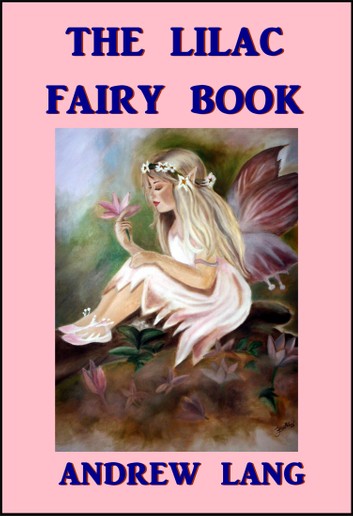
The Lilac Fairy Book by Andre Lang is one of over a dozen fairy tale books edited and collected by Andrew Lang.

The Lilac Fairy Book by Andrew Lang


Andrew Lang's Fairy Books are a series of twenty-five collections of true and fictional stories for children, published between 1889 and 1913. The best known books of the series are the twelve collections of fairy tales, known as Andrew Lang's "Coloured" Fairy Books or Andrew Lang's Fairy Books of Many Colors. In all, the volumes feature 798 stories, besides the 153 poems in The Blue Poetry Book.

Andrew Lang (1844–1912) was a Scots poet, novelist, and literary critic. As acknowledged in the prefaces, although Lang himself made most of the selections, his wife and other translators did a large portion of the translating and retelling of the actual stories. Four of the later volumes (from 1908 to 1912) were published as by "Mrs. Lang".

According to Anita Silvey, "The irony of Lang's life and work is that although he wrote for a profession—literary criticism; fiction; poems; books and articles on anthropology, mythology, history, and travel ... he is best recognized for the works he did not write."
Andrew Lang's Blue Fairy Books in just one of many 'colored' fairy books he produced.

The Blue Fairy Book by Andrew Lang

Andrew Lang's Fairy Books are a series of twenty-five collections of true and fictional stories for children, published between 1889 and 1913. The best known books of the series are the twelve collections of fairy tales, known as Andrew Lang's "Coloured" Fairy Books or Andrew Lang's Fairy Books of Many Colors. In all, the volumes feature 798 stories, besides the 153 poems in The Blue Poetry Book.

Andrew Lang (1844–1912) was a Scots poet, novelist, and literary critic. As acknowledged in the prefaces, although Lang himself made most of the selections, his wife and other translators did a large portion of the translating and retelling of the actual stories. Four of the later volumes (from 1908 to 1912) were published as by "Mrs. Lang".

According to Anita Silvey, "The irony of Lang's life and work is that although he wrote for a profession—literary criticism; fiction; poems; books and articles on anthropology, mythology, history, and travel ... he is best recognized for the works he did not write.